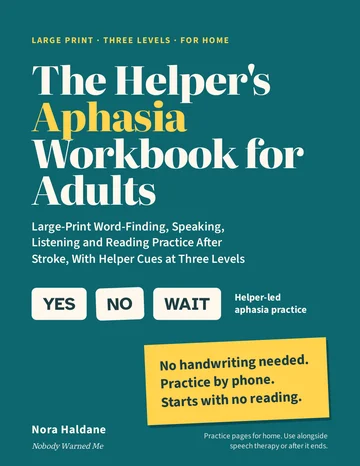
Aphasia after a stroke: practice at home and everyday talk
Aphasia takes away words, not intelligence. The person you are helping still knows what they want to say. Getting it out, or making sense of what others say, is the hard part.
These guides are for the spouse, son, daughter or friend who is now the practice partner and the interpreter, often after therapy sessions have been cut back. They cover how to practise at home without turning it into a test, what the research says about recovery, and small changes that make everyday conversation easier for both of you.
Your speech-language pathologist knows the person you're helping. Ask them for a home program and use these guides alongside it.
- Aphasia exercises at home: how to practice speech after a strokeShort daily sessions, hints from least to most help, and exercises by level. How to run aphasia practice at home without turning it into a test.
- Will aphasia go away after a stroke? What recovery looks likeMost people improve, fastest in the first months, and gains can keep coming for years. What affects recovery and what families can do to help.
- How to talk to someone with aphasia: what helps at homeQuiet room, short sentences, yes-or-no questions, key words on paper and time to answer. How to talk with someone with aphasia, plus a card for outings.